I started reading Chica Umino’s March Comes In Like a Lion after years of hearing about its great outlook on characters dealing with a variety of emotional issues. In particular, its main character, Rei Kiriyama and his struggles to come to terms with his past involving a surrogate parental figure who raised him after his family died, but ignored their own kids for the sake of Rei’s future.
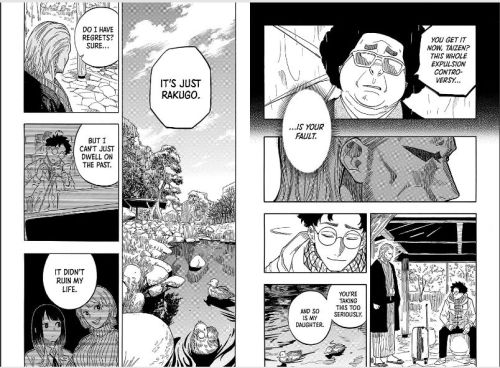
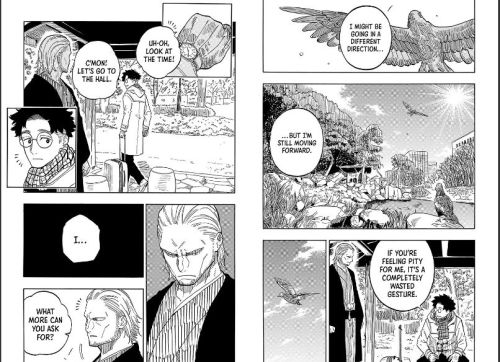
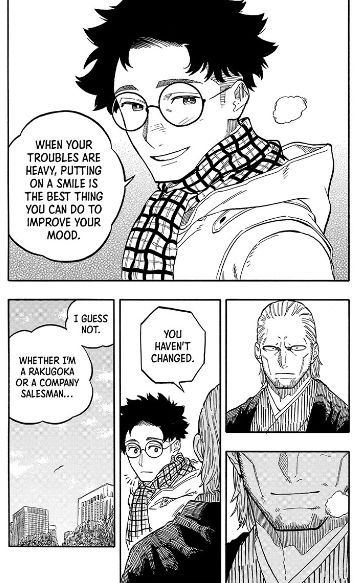
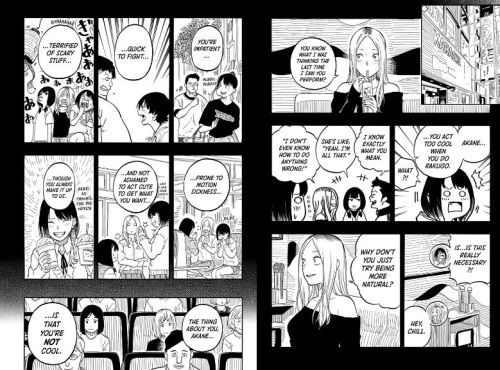
I see this first hand near the end of the 1st volume when Rei reminisces about the past and how he got into shogi.
 ALT
ALT ALT
ALT ALT
ALT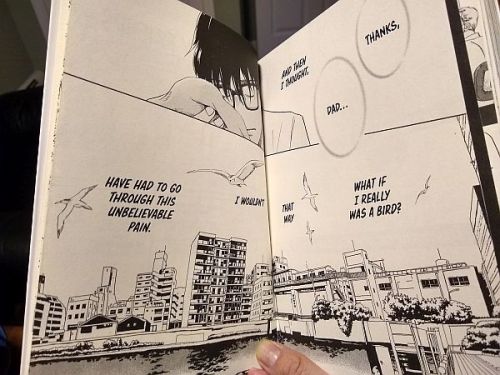 ALT
ALTIt’s scary that I felt the same as Rei about 13 years ago. I remember one time where I felt like I was dragging my family down a hell hole when we moved into a new living situation. I was dealing with so much uncertainty and didn’t know how to handle it. I think at the time, we had limited resources. I felt that I was selfish because I wanted to move to a better place badly over everyone else’s preferences, but my sister reminded me that I wasn’t the only one who wanted out. She even said my thinking was warped. I think I was just so afraid of hurting my family and felt they had to do so much for my depression. I wanted them to stop helping me. I felt like a cuckoo despite not actually being a cuckoo.
When I look back at that time now, I realized that I was facing a new situation that I was overreacting to. It’s fine to react in ways that make you fearful, but there’s a point where it affects your relationships in not-so-healthy ways. You have to be realistic and trust in the people around you despite what your inner critic says.
Rei’s quote about being a bird and free of emotional pain reminded me of my experiences with birds. I used to have a pet African finch and felt that he had it much easier than me. He got to eat, sing, fly around, sleep, poop, etc. And then I remember my finch lived in a cage and was taken care of by creatures (i.e. human beings) that he can’t exactly communicate with. There’s no freedom for him here. And even if my finch was free and roaming, he would have to deal with how vicious wild birds are due to being domesticated. My finch died in 2019 after 11 years of raising him and while I do think he lived a long life for his kind, I have to be careful in saying he lived a good life.
After my finch died, I later discovered an avian center that housed birds of all kinds that were on display while walking on a lunch break from work. There were a variety of them living in a special housing display for everyone to see. All of them were either injured, old, and/or couldn’t be raised by regular folks. I had a lot of joy looking at those birds and would walk by to see them almost all the time. Some of them did die over time, but the birds reminded me how important it is to recognize that we deserve people to care for us when life deals us a terrible hand. I still stop by the avian center bird display because all the birds there are precious to me.
I sometimes wished I was a bird because it sucks being sad a good amount. It sucks to cry when you least expect it. And then I think about what that actually will entail. I don’t want to anthropomorphize animals because it’s hard to compare.
The grand truth is that everyone and everything (humans/animals/plants) goes through pain in some fashion. We decay and wither from time to time. That’s how life works. Obviously, some pain isn’t worth it. But I feel that we have to appreciate to a certain degree how we learn who we really are through our rough experiences. They make us value what’s important in our lives. Despite whatever gaslighting we may get, we can get through the pain and/or live with it in healthy ways.
I will say that one thing I notice about birds is that they’re usually together a lot. During the 1st year of COVID, I saw a family of mourning doves living in the back of my place for a short time. It was one of the cutest things I ever saw. The parents would fly away to look for food, while the kids parked themselves at their temporary home. I don’t know how they’re doing now, but I like to think that they’re doing okay out there. Whenever I see families of mourning doves, I think of that one family.
Maybe a part of me still wants to be a bird - soaring into the air and being out in nature, free of modern life constraints. The real cuckoo isn’t me; it’s those who want us to ignore the interdependence of all things that truly makes human beings feel that they matter.
If you ever feel like you’re a cuckoo, it’s not your fault. You’re a person who deserves the unconditional foundation to live a life full of love to process the pain you unfortunately had to deal with.
Much like what the manga seems to entail, springtime is a time to renew yourself with others around, whether human or animal, after the harshness of winter.